
Definition of stereotypes
The absence of intercultural dialogue creates stereotypical perceptions of members of other cultures. And what are stereotypes at all?
Walter Lippman is a journalist who used the term stereotype in 1922 for the first time. It was borrowed from printers – originally the word was used as a metal model, with which we can create repetitions of identical letters on paper – similarly, people take images of others under the influence of culture. Ule writes that Lippman’s stereotypes were described as “… selective, self-fulfilling and ethnocentric judgments that lead to a narrow, incomplete, biased and inadequate (partial) representation of the world around us” (Ule, 2004).
According to Marthe Augoustinos and Ian Walker (1996), stereotypes are social representations that characterize a social and political environment at a given historical moment. Sometimes researchers felt that stereotypes did not change, but today they think that they are changing, but very slowly.
Some authors, notably psychologists, believe that stereotypes are useful to avoid them since they are an inevitable product of cognitive processes (Sherif, 1969; Schneider, 2005; Turner, 1994, etc.). This opinion is particularly characteristic of cognitive psychological theories. Authors of social cognitive theories (such as the Augostinos as mentioned earlier and Walker, 1996) consider, on the contrary, that stereotypes are not an inevitable part of cognitive processes, that they are obsolete and must be avoided.
Particularly common are negative stereotypes towards minorities, which are often internalised by the latter – they act as self-fulfilling prophecies – some of them then behave following the stereotype (Ule, 2004).
“Stereotypes are biased cognitive judgments, and prejudices have, in addition to cognitive, an emotional and activity dimension, that is, they are more complex and more actively act on behaviour” (Ule, 2004).
Some proponents of stereotypes believe that they contain the grains of truth. Already Allport (1954) spoke of the so-called “kernel of truth” (in Ule: 2004). If we take the case from the US, criminals are indeed a lot of blacks, but this does not mean that we can say stereotypically that black people are criminals. For this, too, indeed, most black people are not criminals.
Ule (2004) believes that stereotypes are generalised to all members of the group and therefore are erroneous and harmful, especially when they cause discrimination that means behaviour that is burdened with prejudices. Stereotypes are simplifications of a complex reality, but they have little in common with the latter. The same author, in the book Social Psychology (2004), thinks that stereotypes are judgments of all who do not apply to anyone since they are the result of inference based on limited information. It is the process of attributing attributes to people based on their group affiliation, not based on individual characteristics and unique features.
Stereotypes change depending on the social context. They are used for political, social and ideological purposes. Jost and Baranja (1994) consider stereotypes of ideological representation that some people use to justify and legitimise existing social relations and power relations in society. It is thus explained that some groups exploit others (in Ule, 2004).
Stereotypes are used as a means of creating prejudices. According to Ule, preconceptions are primarily shown in “a disrespectful, intolerable and disdainful attitude towards others and different, for example, members of other nations, ethnic communities, races, cultures, people with different ways of life, religious, sexual orientation, etc.” (Ule, 2004).
What is a stereotype
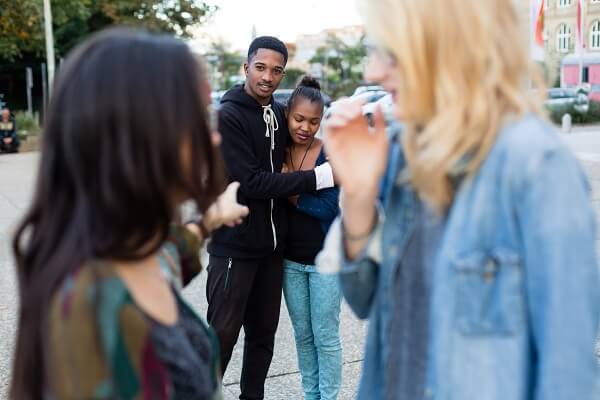
The definition of a stereotype is any commonly known public belief about a particular social group or a type of individual. Stereotypes are often confused with prejudices, because, like prejudices, a stereotype is based on a prior assumption. Stereotypes are often created about people of specific cultures or races.
Almost every culture or race has a stereotype, including Jewish people, Blacks, Irish people, and Polish people, among others.
Stereotypes are not just centred on different races and backgrounds, however. Gender stereotypes also exist. For example, if you say that men are better than women, you’re stereotyping all men and all women. If you say that all women like to cook, you are stereotyping women.
Sexual orientation stereotypes are also common. These stereotypes occur when you have negative views on gays, lesbians, and transgender individuals. People who have these negative views are often known as homophobic.
Why is it bad to stereotype?
Stereotyping is not only hurtful, but it is also wrong. Even if the stereotype is correct in some cases, continually putting someone down based on your preconceived perceptions will not encourage them to succeed.
Stereotyping can lead to bullying at a young age. Jocks and Preps pick on the Nerds and the Geeks; Skaters pick on the Goths, so on and so forth. Stereotyping is encouraging bullying behaviour that children carry into adulthood.
Stereotyping can also lead people to live lives driven by hate and can cause the victims of those stereotypes to be driven by fear. For example, many gays and lesbians are afraid to admit their sexuality in fear of being judged. It is a lose-lose situation, both for those who are doing the stereotype and those who are victims.
Types of Stereotypes
Racial stereotypes
One of the more common stereotype examples is stereotypes surrounding race. For example, saying that all Blacks are good at sports is a stereotype, because it’s grouping the race to indicate that every one of that race is a good athlete.

Gender stereotypes
There are also some common stereotypes of men and women, such as:
- Men are strong and do all the work.
- Men are the “backbone.”
- Women aren’t as smart as a man.
- Women can’t do as good of a job as a man.
- Girls are not good at sports.
- Guys are messy and unclean.
- Men who spend too much time on the computer or read are geeks.

Stereotypes about cultures
Stereotypes also exist that are related to cultures in countries. Stereotype examples of this sort include the premises that:
- All white Americans are obese, lazy, and dim-witted. Homer Simpson of the TV series The Simpsons is the personification of this stereotype.
- Mexican stereotypes suggest that all Mexicans are lazy and came into America illegally.
- All Arabs and Muslims are terrorists.
- All people who live in England have bad teeth.
- Italian or French people are the best lovers.
- All Blacks outside of the United States are poor.
- All Jews are greedy.
- All Asians are good at math. All Asians like to eat rice and drive slowly.
- All Irish people are drunks and eat potatoes.
- All Americans are generally considered to be friendly, generous, and tolerant, but also arrogant, impatient, and overbearing.
Stereotypes about groups of individuals
A different type of stereotype also involves the grouping of individuals. Skaters, Goths, Gangsters, and Preps are a few examples. Most of this stereotyping is taking place in schools. For example:
- Goths wear black clothes, black makeup, are depressed and hated by society.
- Punks wear mohawks, spikes, chains, are a menace to society and are always getting in trouble.
- All politicians are philandering and think only of personal gain and benefit.
- Girls are only concerned about physical appearance.
- All blonds are unintelligent.
- All librarians are women who are old, wear glasses, tie a high bun and have a perpetual frown on their face.
Stereotype threat
A “stereotype threat” arises when one is in a situation where one has a fear of doing something that would inadvertently confirm a negative stereotype. The mere recognition cues that a negative group stereotype could apply to you in each situation. It is essential to understand that the person may experience a threat even if he or she does not believe the stereotype. In this context, a person perceives that the stereotype is a plausible characterisation of himself or herself by others (Steele & Aronson, 1995).
Steele and Aronson (1995) conducted an experiment involving African American and White college students who took a difficult test using items from an aptitude test under one of two conditions. In the stereotype threat condition, students were told that their performance on the test would be a good indicator of their underlying intellectual abilities. In the non-threat state, they were told that the test was merely a problem-solving exercise and was not diagnostic of ability. The performance was compared in the two situations, and results showed that African American participants performed less well than their white counterparts in the stereotype threat condition, but in the non-threat state their performance equalled that of their white counterparts.
In another study (Shih, Pittinsky, and Ambady, 1999) Asian women were subtly reminded (with a questionnaire) of either their Asian identity or their female identity before taking a difficult math test. Results showed that women reminded of their ‘Asianness’ performed better than the control group, and women reminded of their female identity performed worse than the control group.
According to Steele, stereotype threat generates “spotlight anxiety” (Steele & Aronson, 1995), which causes emotional distress and “vigilant worry” that may undermine performance. Students worry that their future may be compromised by society’s perception and treatment of their group, so they do not focus their full attention on the test questions. Students taking the test under stereotype threat might also become inefficient on the trial by rereading the questions and the answer choices, as well as rechecking their answers, more than when not under stereotype threat. It also can induce “attributional ambiguity” – a person gets a low grade and asks, “Is it something about me or because of my race?”.
Difference between cliche, prejudice, and stereotype
Cliché is an established or often repetitive form of something, a form, or a pattern. The term is commonly used for procedures that are expected or predictable. Many times the clichés are worn phrases. Clichés may be often underestimated, although they can be true. Some clichés (or their upgrades) are facts; others may also be stereotypes (Kocmut, 2011). Examples of cliches: Journalistic reports: “It was learned from confidential sources that …” “Picasso destroyed the clichés in painting, Hundertwasser in architecture,” etc.
Prejudices are views that are not justified, argued, and verified, but accompanied by strong emotions and are resistant to change (Rot, 1977). They are shaped by the social representations that prevail in society. In the process of creating prejudice, categories are created – we place ourselves in one, the other into another category. Ule (2004) believes that prejudices are the most stubborn micro-ideologies of the everyday world, which are firmly rooted in the existing mechanisms of power on micro and macro levels. A critical public can take an apology from the prejudice, but they are persistent. Allport (1954) in the book The Nature of Prejudices denotes ethnic prejudice as an antipathy, which is based on incorrect and rigid generalisations. Examples of negative ethnic and social prejudices are anti-semitism, racism, sexual prejudice, religious prejudice, prejudice towards other nations, and national minorities. “Prejudices represent a disguised disposition, readiness to behave” (Ule, 2004). If reality does not coincide with our prejudices, then our brain makes it much easier to change the interpretation of reality than prejudice. “(Ule, 1999)
It is sometimes difficult to express the difference between stereotype and prejudice. Prejudice is always emotionally coloured and negative. It means that you hate someone and create an opinion based on this (for example, Roma are stealing). Stereotypes may also be negative, but not based on feelings (e.g., Scots are frugal). We do not have an emotional relationship, but we take this more or less like a fact.
Prejudices and stereotypes help us evaluate, for example, our own culture, other cultures, and relationships with different cultures. If we are overwhelmed with negative prejudices and stereotypes, we reject other cultures that are attractive and exotic to us. This refusal is reflected in closely related phenomena: discrimination, xenophobia, intolerance, and racism (Ule, 1999).
Stereotypes in schools
At one of the Slovenian schools, pupils among their classmates made an exciting study of stereotypes in elementary schools. Below are some examples that illustrate what they found in their research?
Stereotype: “Gorenjci” are frugal, “Dolenjci” like to look at a glass, Jews are wealthy, Swiss are precise, Montenegrins are lazy, and we all work as blacks.
The survey included three images that were shown as typical representatives of the nations. The first represented the Chinese with its typical pointed hat and a long, thin moustache, the other representing the Indian with a turban and a distinctly drawn dot on the forehead, while the third represented Englishman with a cylinder. The images were attributed to the words Chinese, Indian and Englishman, and the respondents had to link the words with the pictures correctly.
In the study, stereotypic representatives of nations have also been checked. They wanted to show that stereotypes are stereotypes and do not coincide with everyday reality. On the web browser Google, they searched for the words “Englishman,” “Chinese” and “Indian” and counted the images (cartoons, photos, drawings, etc.) of stereotyped representatives of the nation’s sought. The following features were considered: stereotyped Englishman had a half-cylinder, an umbrella and a suitcase, and a briefcase. A typical Chinese guy had a bamboo hood hat, a thin moustache and a beard or hair clad in a whale and a simple long sleeve tunic. The typical Indian had a Hindu turban, a dot in the middle of the forehead as the third eye of the god Shiva and a typical round moustache and a beard. From the characteristics described, the characters in the pictures must have to be at least two. The proportions of “images” of stereotypical representatives of the nations were calculated among the top 100 “paintings” found under this term.
Findings: Almost all classmates recognized the stereotyped members of the nations. On the Google search engine, only one-third of typical Indians, 15% of typical Englishmen and a tenth of typical Chinese have been found among the men’s chosen representatives of selected nations. We confirmed the stereotypes.
Stereotype: Italians eat pizzas, Bavarians drink beer and eat sausages, American without hamburger is not American, Belgians make the best chocolate candy.
They wanted to confirm the next stereotype by proving that you did not have to be Italian if you were eating pizza and pasta. The question was asked which dish is the most Italian: salami and baked sausages, fish dishes, buckwheat, and sour turnips or pizza and pasta. Then they asked them which dish they would have chosen on the menu at the restaurant. Their menu contained the same dish as the previous question.
Expectations were confirmed, as the results of the survey were almost identical to expectations. The clear majority (89%) of classmates decided that the favourite dish of Italian pizza and pasta, while at the same time most (73%) decided that they would prefer pizzas and pasta on the plate, although they were not Italians. Stereotypes have been proven.
Stereotype: “Every nation has its own chefur,” is in the book Chefurji raus! wrote Goran Vojnovic.
They were convinced that such stereotypes live among them. They thought that stereotypes are the most alive in the beginning until we arrive at the newcomers – or until they get used to us. They assumed that the newcomers among schoolmates were less popular, to avoid them at first, and at the same time to help them at the same time to make it easier to get used to the new environment and people.
Methodology: This stereotype was checked by asking the pupils whether they think that the newcomers are less popular and if they “yes” why: because they act differently because they do not hang out with them because we do not understand the language or because ” otherwise “they learn. They examined their opinion with the question of how to behave if an immigrant from another country came to their class. The options were: a new classmate would avoid, help him with language and learning, or think that he was a chef. The stereotype was verified with the sociogram. The respondents (78 pupils of grades 7 and 9) asked two classmates to sit down and two classmates, who would most like to go somewhere for a long time (for example, to school in nature). The elections were counted, especially for arrivals and explicitly for other classmates. The results from the sociograms were compared with opinion polls.
Findings: The hypotheses were partially confirmed. The results of the survey showed that most (53%) of schoolmates and classmates think that immigrants are less popular. The opinions of girls and boys are not significantly different. Resentments are unpopular mainly because they “stick to” themselves and do not socialize (25%) with the respondents because they do not understand the language (12%) because they behave differently (9%) and because they learn less well (7%). Stereotypically, they would behave as well – three-quarters of the respondents would avoid arrivals! The only surprise in the findings was the fact that only eight classmates (out of 94 respondents) would help newcomers to learn a language or learning material. A large proportion (16%) of classmates and classmates would think abusively and contemptuously about the arrivals. From conversations and our own experiences, however, we know that newcomers are less and less unpopular in time.The results of the sociogram also confirmed that the newcomers are not actually as popular as the other classmates. On average, each newcomer was chosen 1.6 times on average, while other schoolmates and classmates average 4.2 times. Without the election, there were 25% of the newcomers, but also 14% of the other classmates. So, not only are the newcomers less popular. Most often, the majority expect that the minority will adjust. Only in exceptional situations and with exceptional people is the opposite. They think that in such cases stereotypes can help the minority to become more involved in the new environment and the group. Behaviour towards arrivals is therefore stereotypical, but over time, the stereotype experiences are blurred.
National prejudices (examples)
What are the Slovenes’ stereotypes about Slovenes and Slovenian neighbours?
In the thesis of Helena Ogris, the results of the research on stereotypes and prejudices on other nations and national minorities in Slovenia are described. The survey involved 105 respondents, 40% (42) women and 60% of men (63). The majority of respondents, about two-thirds are between 26 and 45 years old, while 22% are older than 46, only 14% are under the age of 25.
Findings:
Most of the respondents view Slovenia as unproblematic as a peaceful islet on which people love themselves. Similarly, the majority of respondents agree that Slovenians are a decent, hardworking, honest and disciplined nation. The respondents also mostly agree that the Slovenians are non-aggressive, humble, so to speak, the “servile” people. The claim that the Slovenes are quarrelsome, unwilling to give up and inaccurate did not persuade the respondents since they only partially agree with it; on the other hand, the majority agrees or even wholly agrees with the claim that Slovenes are envious, unbearable (especially among themselves) and envious.
The following findings show that the stereotypes are present in Slovenia and that there are gaps between cultures and peoples. The respondent’s responses, for example, show that a girl’s mother would regard her relationship with “Šiptar” (the Albanian) as a personal ruin and a terrible disappointment. Respondents are convinced that the girl in this way is expeditiously destroying her life. With the claim that Slovenians do not have anything in common with “južnaki”, “balkanci,” or “jugosi” (offensive expressions for people from south, Balkan) most do not agree, and the majority only partially agrees with the claim that is literally seen as a stereotype of Slovenes (Slovenes are engaged in all possible sports, and at home, they are dressed in a sweatshirt and wearing slippers).
The research also focuses on people living in neighbouring countries, national minorities in Slovenia and people who are the most numerous inhabitants of Slovenia. Stereotypes or claims about the properties of individual nations are summarized in various literature. Individual expressions derive from the jargon of everyday life and do not intend to complain to anyone.
From the answers of the respondents, it can be concluded that the stereotype about the Austrians, who would like to eat Viennese steaks, danced the Viennese waltzes and want to “yodel” did not fully convince the respondents. Most claimed this claim with “neither yes nor no.” Nevertheless, as many as 40% of those polled, mostly agree. The following are the stereotypes that most “majority” respondents agree:
- Austrians do not like us because we are “jugos” for them.
- Italians like eating pasta and wearing sunglasses at any time, time, and place.
- The Croats are predominantly petty, impatient and xenophobic.
- Serbs are authoritarian and folklore.
- The Germans are a hardworking, precise and exceptionally accurate nation.
The results show that stereotypes are still present among the respondents. Most of the participants in the survey, when in contact with members of those nations, see it as described.
Different stereotypes and prejudices against other nations and ethnic minorities cannot be avoided by the Roma issue. Most of the respondents say they disagree with the assertion that members of the Roma community could be assimilated into Slovenian cultural space. It is a pessimistic view of Roma issues, permeated with stereotypes and some prejudices. The following is a stereotype and a term that appears in the spoken language in Slovenia. By claiming that “čefur” is a man who deliberately rejects values, the language and culture of the people he lives with, most respondents disagree. Nevertheless, on the contrary, a quarter of the respondents fully agree with the reasoning. In conversational language, we often encounter words that we do not really know what they mean, but we often use them. The research proves that stereotypes are strongly linked to individual words that are used or used in the Slovene language space. The latter proves the answers to the following statement (1) “… when I hear the word” čefur”, I think of a man coming from the former Yugoslav republics, he is very much cursing, wearing a toothpick in his mouth, dressed in a sweatshirt, leather jacket and white sports shoes” and (2) “the term” Balkan “or” balkanization “has a predominantly negative sign for the marking of events, countries, people, nations, and individuals”. One-third of respondents agree with these claims. The last claim that the dialogue between cultures is an indispensable means of bringing the European nations together, both among themselves and among the cultures they make, was set up to foster awareness of the excessive use of stereotypes. Thus, with this argument, 80% of the respondents agree in whole or in part.
